About the Event
Stunting (too short for one’s age) is an irreversible and chronic manifestation of undernutrition. It contributes to one-third of under-five deaths. Stunting adversely affects a child’s survival, health, development, learning capacity, school performance and his/her productivity in adulthood.
According to NFHS-3 (2005-06), India houses the highest number of stunted children globally. Almost half of Indian children are stunted with the prevalence being highest among children belonging to scheduled tribes - India’s tribal peoples. Read more >
About Event
Stunting in tribal children, like that of all other children, is influenced by a multitude of factors including household food insecurity, maternal nutrition, poor feeding and care practices in the first two years of life and poor access to water, health and sanitation services.
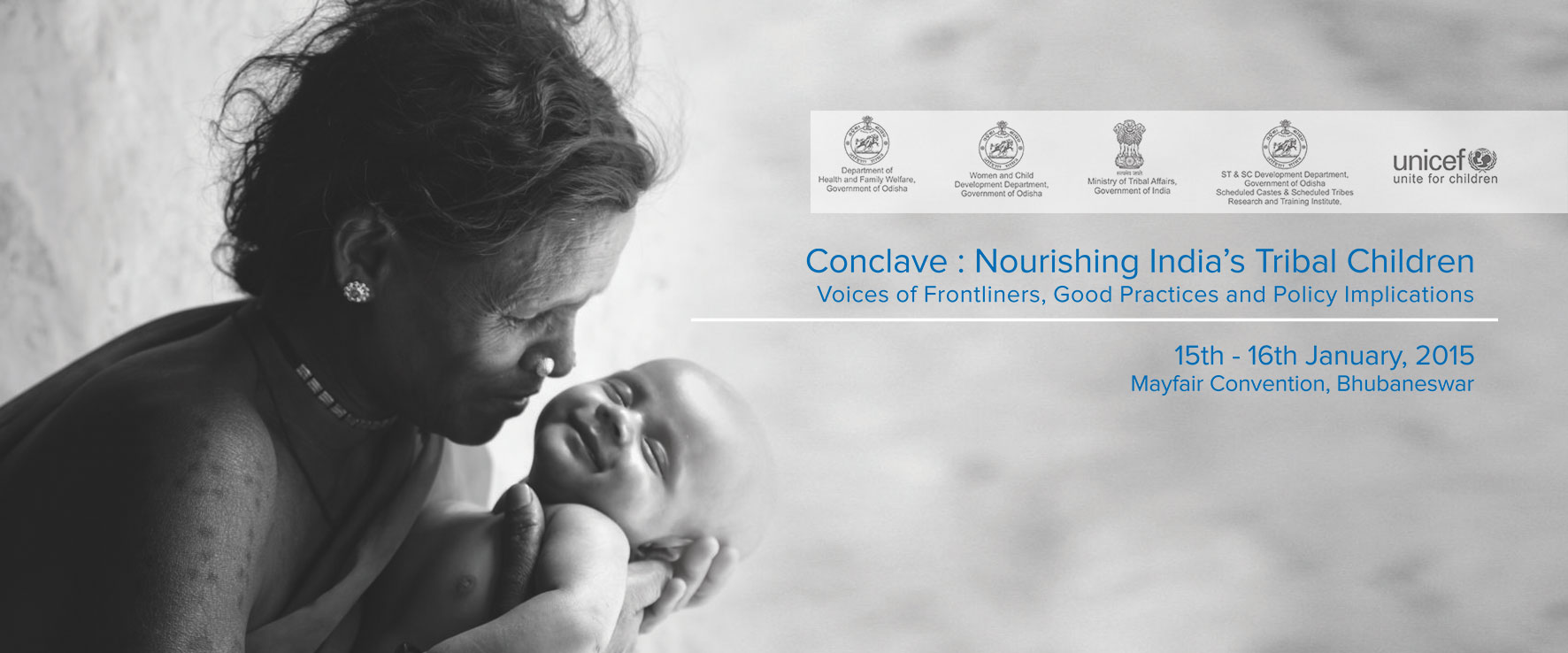
In order to start a discourse around what actions need to be taken to accelerate reduction of stunting in tribal children, SC/ST Research and Training Institute Odisha, in collaboration with Departments of Scheduled Caste and Scheduled Tribe, Women and Child Development and Health and Family Welfare in Odisha as well as UNICEF Odisha and Ministry of Tribal Affairs is organizing a two-day conclave titled ‘Nourishing India’s tribal children: voices of frontliners, good practices and policy implications’ on 15-16 January 2015 in Mayfair Convention, Bhubaneswar.
The central focus of this conclave is to share “what works and how,” inviting voices of frontliners, practitioners and government officials in eight states (Andhra Pradesh, Chhattisgarh, Gujarat, Jharkhand, Madhya Pradesh, Maharashtra, Odisha and Rajasthan). It emphasizes how various government departments in these states can coordinate, contribute and collaborate for reducing stunting in India’s tribal children.
Conclave Objectives:
- Collectively identify gaps and good practices, and chart a road map for improving access to food, nutrition, and health and sanitation services for children in tribal pockets.
- Solidify all stakeholders’ commitment toward tribal children’s development.
Participating States: Andhra Pradesh, Chhattisgarh, Gujarat, Jharkhand, Madhya Pradesh, Maharashtra, Odisha and Rajasthan.
Representatives from: State and district SC/ST Department officials, Tribal Research Institutes; field practitioners; Commissioners of State Departments of Women and Child Development, Health and Family Welfare, Drinking Water and Sanitation; and national representation from Ministries of Tribal Affairs, Health and Family Welfare, Rural Development and Women and Child Development.
Format: Six thematic sessions facilitated with open space technology: 1. Food and livelihood security; 2. Reach of Integrated Child Development Services; 3. Outreach and referral of health services; 4. Water and sanitation services; 5. Tribal budgets and plans; and 6. Role of development agencies. Each thematic session will be facilitated by a technical expert in the subject area.
Entry: by invitation only
REPORT (Demo content)
Lorem Ipsum is simply dummy text of the printing and typesetting industry. Lorem Ipsum has been the industry's standard dummy text ever since the 1500s, when an unknown printer took a galley of type and scrambled it to make a type specimen book. It has survived not only five centuries, but also the leap into electronic typesetting, remaining essentially unchanged. It was popularised in the 1960s with the release of Letraset sheets containing Lorem Ipsum passages, and more recently with desktop publishing software like Aldus PageMaker including versions of Lorem Ipsum.
Lorem Ipsum is simply dummy text of the printing and typesetting industry. Lorem Ipsum has been the industry's standard dummy text ever since the 1500s, when an unknown printer took a galley of type and scrambled it to make a type specimen book. It has survived not only five centuries, but also the leap into electronic typesetting, remaining essentially unchanged. It was popularised in the 1960s with the release of Letraset sheets containing Lorem Ipsum passages, and more recently with desktop publishing software like Aldus PageMaker including versions of Lorem Ipsum.
Lorem Ipsum is simply dummy text of the printing and typesetting industry. Lorem Ipsum has been the industry's standard dummy text ever since the 1500s, when an unknown printer took a galley of type and scrambled it to make a type specimen book. It has survived not only five centuries, but also the leap into electronic typesetting, remaining essentially unchanged. It was popularised in the 1960s with the release of Letraset sheets containing Lorem Ipsum passages, and more recently with desktop publishing software like Aldus PageMaker including versions of Lorem Ipsum.
FILMS (Demo content)
Lorem Ipsum is simply dummy text of the printing and typesetting industry. Lorem Ipsum has been the industry's standard dummy text ever since the 1500s, when an unknown printer took a galley of type and scrambled it to make a type specimen book. It has survived not only five centuries, but also the leap into electronic typesetting, remaining essentially unchanged. It was popularised in the 1960s with the release of Letraset sheets containing Lorem Ipsum passages, and more recently with desktop publishing software like Aldus PageMaker including versions of Lorem Ipsum.
Lorem Ipsum is simply dummy text of the printing and typesetting industry. Lorem Ipsum has been the industry's standard dummy text ever since the 1500s, when an unknown printer took a galley of type and scrambled it to make a type specimen book. It has survived not only five centuries, but also the leap into electronic typesetting, remaining essentially unchanged. It was popularised in the 1960s with the release of Letraset sheets containing Lorem Ipsum passages, and more recently with desktop publishing software like Aldus PageMaker including versions of Lorem Ipsum.
Lorem Ipsum is simply dummy text of the printing and typesetting industry. Lorem Ipsum has been the industry's standard dummy text ever since the 1500s, when an unknown printer took a galley of type and scrambled it to make a type specimen book. It has survived not only five centuries, but also the leap into electronic typesetting, remaining essentially unchanged. It was popularised in the 1960s with the release of Letraset sheets containing Lorem Ipsum passages, and more recently with desktop publishing software like Aldus PageMaker including versions of Lorem Ipsum.
Success Stories (Demo content)
Lorem Ipsum is simply dummy text of the printing and typesetting industry. Lorem Ipsum has been the industry's standard dummy text ever since the 1500s, when an unknown printer took a galley of type and scrambled it to make a type specimen book. It has survived not only five centuries, but also the leap into electronic typesetting, remaining essentially unchanged. It was popularised in the 1960s with the release of Letraset sheets containing Lorem Ipsum passages, and more recently with desktop publishing software like Aldus PageMaker including versions of Lorem Ipsum.
Lorem Ipsum is simply dummy text of the printing and typesetting industry. Lorem Ipsum has been the industry's standard dummy text ever since the 1500s, when an unknown printer took a galley of type and scrambled it to make a type specimen book. It has survived not only five centuries, but also the leap into electronic typesetting, remaining essentially unchanged. It was popularised in the 1960s with the release of Letraset sheets containing Lorem Ipsum passages, and more recently with desktop publishing software like Aldus PageMaker including versions of Lorem Ipsum.
Lorem Ipsum is simply dummy text of the printing and typesetting industry. Lorem Ipsum has been the industry's standard dummy text ever since the 1500s, when an unknown printer took a galley of type and scrambled it to make a type specimen book. It has survived not only five centuries, but also the leap into electronic typesetting, remaining essentially unchanged. It was popularised in the 1960s with the release of Letraset sheets containing Lorem Ipsum passages, and more recently with desktop publishing software like Aldus PageMaker including versions of Lorem Ipsum.
Breakfast With Tribal Think Tanks (Demo content)
Lorem Ipsum is simply dummy text of the printing and typesetting industry. Lorem Ipsum has been the industry's standard dummy text ever since the 1500s, when an unknown printer took a galley of type and scrambled it to make a type specimen book. It has survived not only five centuries, but also the leap into electronic typesetting, remaining essentially unchanged. It was popularised in the 1960s with the release of Letraset sheets containing Lorem Ipsum passages, and more recently with desktop publishing software like Aldus PageMaker including versions of Lorem Ipsum.
Lorem Ipsum is simply dummy text of the printing and typesetting industry. Lorem Ipsum has been the industry's standard dummy text ever since the 1500s, when an unknown printer took a galley of type and scrambled it to make a type specimen book. It has survived not only five centuries, but also the leap into electronic typesetting, remaining essentially unchanged. It was popularised in the 1960s with the release of Letraset sheets containing Lorem Ipsum passages, and more recently with desktop publishing software like Aldus PageMaker including versions of Lorem Ipsum.
Lorem Ipsum is simply dummy text of the printing and typesetting industry. Lorem Ipsum has been the industry's standard dummy text ever since the 1500s, when an unknown printer took a galley of type and scrambled it to make a type specimen book. It has survived not only five centuries, but also the leap into electronic typesetting, remaining essentially unchanged. It was popularised in the 1960s with the release of Letraset sheets containing Lorem Ipsum passages, and more recently with desktop publishing software like Aldus PageMaker including versions of Lorem Ipsum.
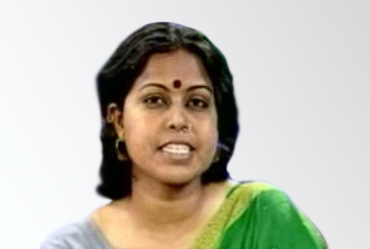
Biraj Swain
Moderator for parallel session 01 – ‘Improving household food insecurity in tribal areas’
Biraj Swain has been the co-author of the Report – Nourishing India’s tribal Children, which will be released during the conclave. She is an international development professional with over 15 years of experience in India, South Asia, East Africa & at global level. She works on poverty, public policy, citizens-state engagement across public sector, INGOs & UN Systems and academia. Her core sectors are Food and Nutrition, Essential Services (Health and WatSan), Livelihoods and Agri Policy. She has teaching affiliations with UNESCO-MISARC, Swedish University of Development and Ag Sciences-Upsalla, India's Pondicherry Central University, UNU-Tokyo and CSIR-NISTADS. She has written and published extensively on her core sectors in academic & pop journals. She has co-authored & co-edited the IDS Bulletin, Standing on the Threshold: Food Justice in India with Lawrence Haddad and CP Chandrasekhar. She has worked with Unicef, FAO, World Bank, DFID, Water Aid, CARE, Oxfam, Aga Khan PBSI, Action Aid & CNBC-TV-18 in capacities of expert, core member & team leader.
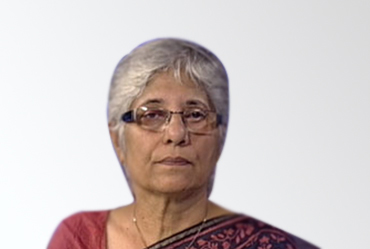
Neerja Chowdhury
Moderator for parallel session 02 – ‘Improving ICDS in tribal areas’ and parallel session 04 – ‘Improving drinking water and Sanitation services/commodities in tribal areas’
Smt. Neerja Chowdhury is a Journalist for three decades, a columnist and political commentator. She spearheads the citizen’s alliance against malnutrition. She has supported UNICEF’s work with reputed Indian Parliamentarians and is a very reputed journalist and political commentator known for her work on malnutrition. She participates in various TV debates and speaks at prestigious academic institutions.
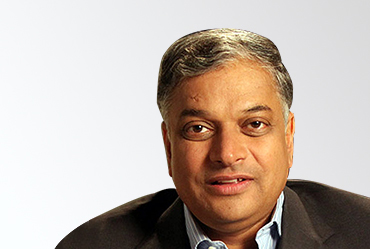
Pankaj Pachauri
Moderator for parallel session 03 – ‘Improving tribal health outreach and referral services’
Pankaj Pachauri is a reputed Indian TV anchor and journalist. Pachauri is mainly associated with NDTV, BBC, India Today, The Sunday Observer and the Patriot newspaper. He has more than 20 years of experience in print and broadcast journalism. He has many awards such as the 'The Statesman Award for Rural Reporting in 1989 for his expose on the practice of female infanticide in Rajasthan. He also received the Srikant Verma Award for journalism in 1990. He had been adjudged the best Hindi language anchor by peers between 2005-2011. In January 2012, Pachauri was appointed as the Communications Adviser to the Prime Minister's Office in India under Dr Manmohan Singh. He was responsible for getting the PMO on various social media platforms for the first time and pioneered Indian Government's highest office's policy in social media interaction. He is also a political expert participating in TV debates and speaks at prestigious institutions like the IIMC, Kolkata.
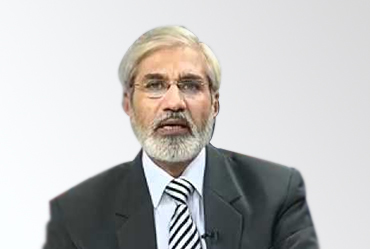
Rahul Dev
Moderator for parallel session 05 – ‘Improving tribal health outreach and referral services’
Rahul Dev is the COO and Editor in Chief of news Channel - Complete News & Entertainment Broadcast Pvt Ltd. who has worked on various development issues. Dev has nearly 18 years’ experience in print and television. He has been Editor of Jansatta. In television, he has been associated with Aaj Tak, Doordarshan, Zee News and Janmat. Dev also does volunteer work and runs Samyak Foundation. He has also supported as anchor and moderator various panel discussions with UNICEF WASH Section on the Global Inter-faith Wash Alliance.
Amitabh Behar
Moderator for parallel session 06 – ‘Tribal budgets, governance and coordination for nutrition in tribal areas’
Amitabh Behar is the Executive Director of the National Foundation for India (NFI). Amitabh's areas of interest are governance and civil society. Over the years he has worked on issues promoting governance accountability and social action. He is one of the leading experts of people centered advocacy and was the Executive Director of the National Centre of Advocacy Studies (NCAS). He is the Co-chair of the Global Call to Action Against Poverty (GCAP), the Convener of National Social Watch Coalition and earlier the Convener of the Wada Na Todo Abhiyaan (Don't Break Your Promises Campaign) in India. He sits on several organizational boards including Centre for Budget and Governance Accountability (CBGA), Navsarjan and mobile creche and is the President of Yuva.
Vandana krishna-IAS
Ms. Vandana Krishna is a 1985 batch IAS officer and currently the PS and Director General of the RJMCHN Mission-. She holds a Master’s Degree from Delhi School of Economics and also in management from Glasgow UK.During her tenure with Government of Maharashtra she has been instrumental in bringing out the special initiative of foster care known as the BalsangopanYojana-(Foster care program) after the earth quake in Latur to rehabilitate many orphan children in the families.
Later on she held the following positions as Secretary Women and Child Development, Secretary Health and Family Welfare, PS DWCD and now DG Mission. Her core area of interest has been adolescents, Communication and Nutrition.
Dr. Ajay Parida
Dr. Ajay Parida is the Executive Director of the M. S. Swaminathan Research Foundation, Chennai and a well recognized and leading researcher in the field of Agriculture, Plant Molecular Biology and Biotechnology. Dr. Parida has done exceedingly outstanding work of great scientific significance and considerable social relevance. His major scientific contribution is in the area of application of frontier technology for addressing major challenges in global and national declining agriculture productivity threatened due to climate change, sea level rise and reduced precipitation. He has more than 90 peer reviewed publications. Dr. Parida is elected fellow of National Academy of Sciences of India and National Academy of Agriculture Sciences and recipient of several awards - Umakant Sinha Memorial Award; B. M. Birla Science Prize, National Biosciences Award; NASI-Reliance Award, TATA Innovation Fellowship and Recognition Award from the NAAS. In 2014 he was conferred Padma Shri by the Govt. of India.
Dr. Alok Pandey
Dr. Alok Pandey, a development practitioner, is currently working as Deputy Director at PRIA, New Delhi. He has more than
18 years of work experience. He is the member of the National Resource Group formed by the Ministry of Panchayati Raj,
Government of India to build capacities of the panchayats on sanitation. He is also a National Expert under Rajiv Gandhi
Panchayat Sashaktikaran Abhiyan and supported various state governments to develop their plans under RGPSA. He has also
supported the Ministry of Panchayati Raj, Government of India to build capacities of the National Evaluators under
Panchayat Empowerment and Accountability Incentive Scheme (PEIAS).
Dr. Alok Pandey has an expertise in the field of local governance and decentralised planning. He has more than 40 published
articles in his credit. These articles are published in international and national journals and magazines. His research
works and papers have also published in eight books, edited by distinguished academicians in the field of Economics
and Social Work. Dr. Alok Pandey has a wide experience of working in different parts of India.